How to Choose the Right Hydraulic Cylinder Seals:
Hydraulic and pneumatic cylinder performance depends heavily on one critical component that often gets overlooked during early design stages: the sealing system. The right seal choice directly impacts efficiency, reliability, maintenance cycles, and overall operating cost. Understanding how materials, environments, and motion dynamics influence seal performance helps engineers avoid premature failures and maximize equipment uptime.
Why Seal Selection Matters More Than You Think
Seals do far more than prevent leaks. They maintain pressure, control lubrication, reduce contamination, and protect internal components from wear. Poor seal selection can lead to:
- Excessive friction and heat generation
- Internal bypass or external leakage
- Reduced cycle life
- Contamination entering the cylinder
- Unexpected downtime and higher maintenance costs
In high-demand industries such as pipe and steel manufacturing, seal performance becomes even more critical due to extreme temperatures, debris, and heavy loads.
Key Factors Engineers Should Evaluate
1. Operating Environment
Environmental conditions should guide material selection from the start. Consider:
- Temperature range and thermal cycling
- Exposure to scale, dust, or abrasive particles
- Moisture or chemical exposure
- Outdoor vs. controlled indoor environments
For example, high-heat steel processing may require seals that maintain elasticity under elevated temperatures, while washdown environments may demand enhanced chemical resistance.
2. Pressure and Speed Requirements
Seal geometry and material must match both system pressure and rod speed.
- High-pressure systems require robust profiles to prevent extrusion.
- High-speed applications benefit from low-friction materials that reduce heat buildup.
Balancing pressure capability with dynamic efficiency prevents premature wear.
3. Motion Type and Frequency
Is the cylinder running continuously, intermittently, or holding static loads? Each scenario influences seal wear differently.
- Frequent cycling demands materials with strong abrasion resistance.
- Long dwell times may require seals designed to prevent stick-slip motion.
Understanding the duty cycle helps avoid issues like jerky movement or surface scoring.
4. Fluid Compatibility
Hydraulic fluid type affects seal lifespan. Engineers should verify compatibility with:
- Mineral oils
- Synthetic fluids
- Biodegradable fluids
- Air or dry gas systems (for pneumatic cylinders)
Material swelling, hardening, or degradation can occur when compatibility is overlooked.
Common Seal Materials and When to Use Them
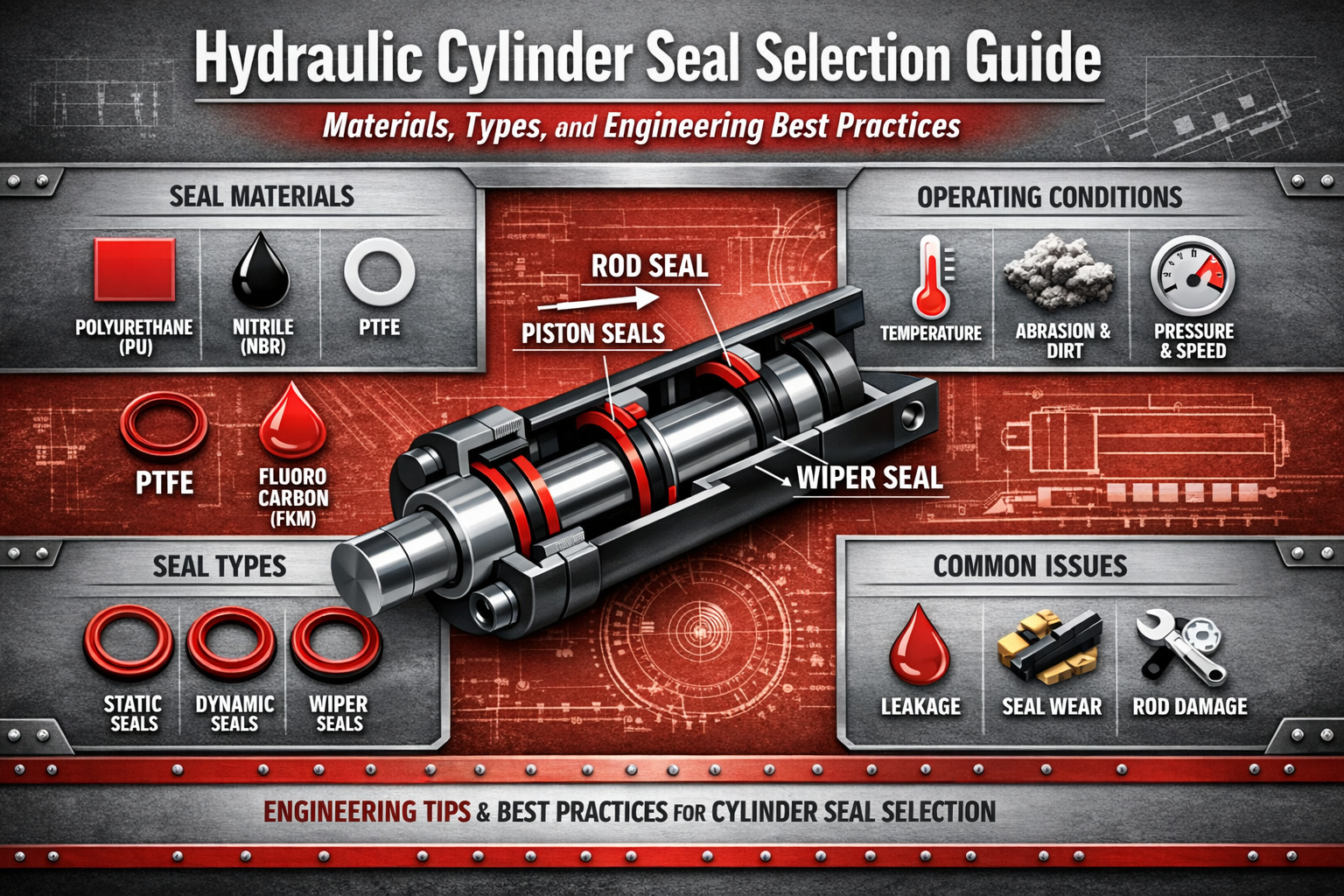
Polyurethane (PU)
- Excellent wear resistance and strength
- Ideal for high-pressure hydraulic applications
- Performs well in abrasive environments
Nitrile (NBR)
- Reliable general-purpose material
- Good oil resistance
- Suitable for moderate temperature ranges
PTFE (Teflon-based blends)
- Extremely low friction
- Excellent for high-speed or precision applications
- Often used with energizers to maintain sealing force
Fluorocarbon (FKM/Viton)
- Strong chemical and temperature resistance
- Used where heat or aggressive fluids are present
Selecting the right material is rarely about choosing the “strongest” option. It is about matching material properties to the application’s real-world conditions.
Static vs. Dynamic Sealing Considerations
Engineers should distinguish between static seals and dynamic seals when designing cylinders.
- Static seals prevent leakage where no movement occurs, such as end caps or ports.
- Dynamic seals operate against moving surfaces like rods and pistons, requiring careful attention to friction, lubrication, and wear.
Dynamic sealing systems often include multiple elements working together, such as primary seals, secondary seals, and wipers that remove debris from the rod surface.
The Role of Wipers and Secondary Protection
Wipers are often underestimated but play a major role in extending cylinder life. In environments like tube mills or steel processing, debris can quickly damage internal components if not properly removed.
A well-designed sealing package typically includes:
- Primary pressure seal
- Secondary seal for redundancy
- Wiper to keep contaminants out
- Wear bands to guide motion and reduce metal-to-metal contact
- Signs Seal Selection May Need Improvement
Engineers should review seal design if they notice:
- Frequent replacement cycles
- Visible scoring on rods
- Fluid contamination
- Loss of positioning accuracy
- Increased friction or energy consumption
Early evaluation can prevent larger system failures.
Partnering for the Right Seal Solution
Seal selection should not be an afterthought during cylinder specification. Working with experienced cylinder manufacturers during the design phase allows engineers to evaluate environmental conditions, duty cycles, and performance goals before production begins. A collaborative approach helps ensure the sealing system supports both reliability and long-term efficiency.
Seals may be small components, but they have a disproportionate impact on cylinder performance. By considering operating conditions, motion dynamics, fluid compatibility, and material properties early in the design process, engineers can reduce maintenance issues and improve overall system reliability. Thoughtful seal selection leads to longer service life, smoother operation, and better performance across demanding industrial applications.