
Common Causes of Hydraulic Cylinder Failure and How to Prevent Them
Hydraulic cylinders are designed to provide years of reliable service, but even the most robust cylinder can experience issues if operating conditions, maintenance practices, or application requirements are overlooked. Understanding the most common causes of hydraulic cylinder failure can help reduce downtime, lower maintenance costs, and extend equipment life.
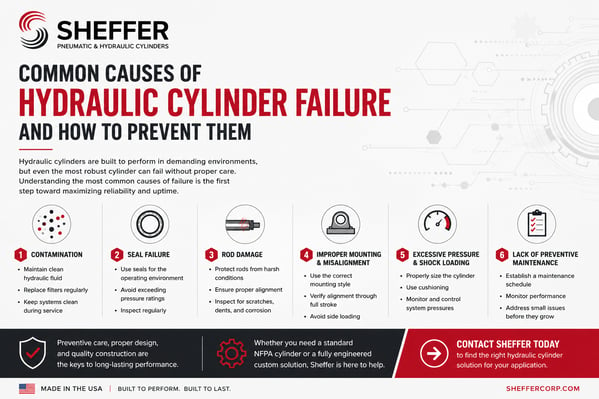
1. Contamination
Contamination is one of the leading causes of hydraulic cylinder failure. Dirt, metal particles, water, and other contaminants can enter the hydraulic system and damage seals, wear surfaces, and internal components.
Prevention Tips:
- Maintain clean hydraulic fluid.
- Replace filters at recommended intervals.
- Inspect rod wipers and seals regularly.
- Follow proper maintenance procedures during repairs and installations.
2. Seal Failure
Seals are critical to cylinder performance. Over time, seals can wear out due to age, excessive heat, pressure spikes, contamination, or improper installation.
Signs of seal failure include:
- External fluid leakage
- Reduced cylinder performance
- Drift or inability to hold position
- Increased operating temperatures
Prevention Tips:
- Use seals designed for the operating environment.
- Avoid pressure conditions that exceed cylinder ratings.
- Perform routine inspections before leaks become severe.
3. Rod Damage
A damaged piston rod can quickly lead to seal wear and fluid leakage. Common causes include corrosion, impact damage, side loading, and debris buildup.
Prevention Tips:
- Protect exposed rods from harsh environments.
- Consider stainless steel or specialty coatings for corrosive applications.
- Ensure proper cylinder alignment during installation.
- Inspect rods regularly for scratches, dents, or pitting.
4. Improper Mounting and Misalignment
When a hydraulic cylinder is improperly mounted or subjected to side loads it was not designed to handle, excessive stress can develop throughout the cylinder assembly.
Potential consequences include:
- Premature seal wear
- Rod bending
- Excessive bearing wear
- Reduced service life
Prevention Tips:
- Select the proper mounting style for the application.
- Verify alignment throughout the full stroke.
- Consult with cylinder engineers when designing new equipment.
5. Excessive Pressure and Shock Loading
Hydraulic systems that regularly experience pressure spikes or shock loads can damage cylinder components and shorten service life.
Prevention Tips:
- Verify that the cylinder is properly sized for the application.
- Use cushioning where appropriate.
- Monitor system pressures and address recurring spikes.
6. Lack of Preventive Maintenance
Many cylinder failures begin as minor issues that go unnoticed. Small leaks, worn seals, or rod damage can eventually lead to costly repairs and unexpected downtime.
Prevention Tips:
- Establish a preventive maintenance schedule.
- Monitor cylinder performance regularly.
- Address small issues before they become major failures.
Partner with the Right Cylinder Manufacturer
Preventing hydraulic cylinder failure starts with proper design, quality manufacturing, and ongoing support. Whether you need a standard NFPA cylinder or a fully engineered custom hydraulic cylinder, selecting the right cylinder for the application can significantly improve reliability and performance.
At Sheffer Corporation, we manufacture hydraulic cylinders designed to withstand demanding industrial environments while providing the performance and durability customers expect. Our engineering team works closely with customers to develop solutions that minimize downtime and maximize equipment productivity.
If you're experiencing cylinder performance issues or planning a new application, contact Sheffer to discuss the best hydraulic cylinder solution for your needs.


